Showing posts with label Museum of Natural History. Show all posts

Monday, December 31, 2018

Manila Heritage Nostalgia | Exploring the Natural Richness at the Museum of Natural History

For the final part of this blog post about my second visit in the Museum of Natural History, it is all about the natural resources and biodiversity of our country which can be found in the galleries in the fifth floor, as well with the reflections that I've gained in this tour.
The replicas of Lolong and a Philippine duck flying above the crocodile.
First, we have the gallery called the Philippine Biodiversity. You can find the different plants and animals which are common in the country. The main attraction in this gallery is the replica of Lolong with flying ducks and other birds surrounded the crocodile.
The comparison of jaws between a present-day bull shark, the smaller ones and  a replica of a megalodon shark.
Different marine creatures (clockwise) such as the nautilus and horseshoe crab, a replica of Jurassic ammonite,
a black marlin and other marine fossils such as the Tridacna gigas and other corals.
Fossils and remains of stegodon, rhinoceros, giant tortoise and a bovid.
Different marine fossils from the prehistoric era.
Don't forget also to visit the gallery of Life Through Time. As you enter the gallery, the first thing that you can see is the comparison of jaws of a bull shark and a replica of megalodon shark, a large prehistoric shark. You can also see different marine fossils and creatures living since the prehistoric era and their similar creatures in the present time. You can also check the fossils and replica of prehistoric land animals such as the rhinoceros, stegodon, bovid and a giant tortoise.
Different igneous rocks.
Various minerals which can be found in the country.
Different energy sources from wind energy, solar energy and geothermal energy.
Different forms of mining such as gathering gold and minerals from the rivers and mining under the ground.
Rehabilitating an open mine pit to an ecopark.
Then, we also have the galleries of Minerals and Energy Resources where you can see different energy sources used in the Philippines such as geothermal, wind, solar  and hydrothermal. Also, you can see different minerals found in our country as well with the places where you can find minerals.
A diorama on how lahar occurs during the rainy season. 

Don't also forget to visit the gallery of Geology of the Philippines. You may see a diorama of the layers of the Earth and a volcanic lava.  You can also see a map which shows the different volcanoes in the country, various igneous rocks and how lahar occurs. According to Wikipedia, lahar is an Indonesian term that  describes a hot or cold mixture of water and rock fragments that flows down the slopes of a volcano and typically enters a river valley. In other words, it is a dangerous debris flow that came from a volcano.
The game will provide 10 to 12 pictures and you will match it on the names below.
If you got it correct, then there will be additional points.
The game will test your knowledge and speed.
A father and his son are playing this interactive game.
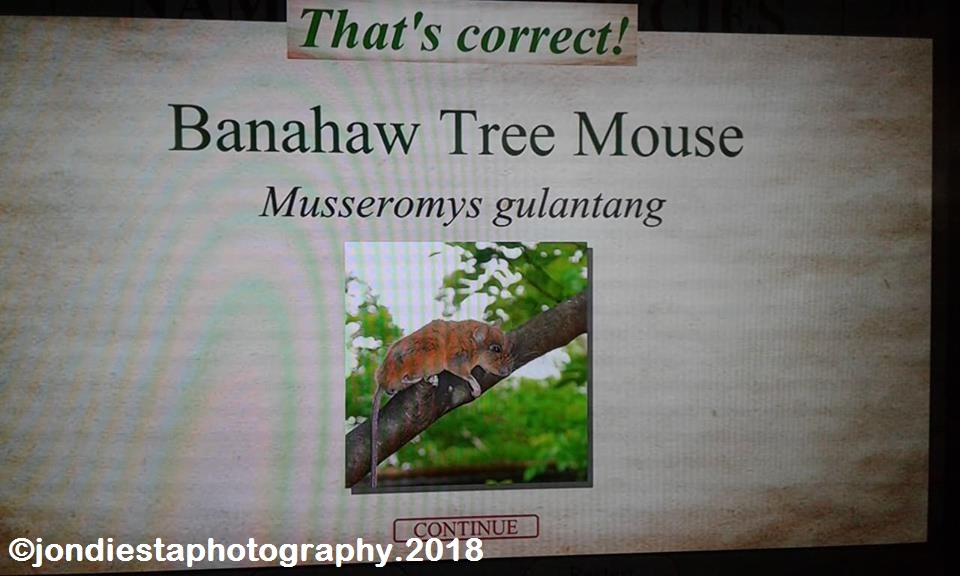
In some galleries particularly in the fourth floor, there are interactive games that you can enjoy. These games will test your knowledge about the different flora and fauna in the Philippine forests. I really enjoyed these interactive games because of the additional knowledge and a challenge of memory if you really roamed around the museum and take a closer look of the various species.
Different varieties of birds which can be found in the  Philippine rainforests.
Definitely, my tour here in this museum enhanced my knowledge on how rich the Philippine flora and fauna is. We need to take care of our nature, conserve the plants and animals and save our habitat for the future of our nature.

Date of Travel: November 17, 2018

Monday, December 24, 2018

Manila Heritage Nostalgia | The Second Visit at the Museum of Natural History

After months of waiting, the galleries at the National Museum of Natural History are done. They can be visited by the public and you may explore more about the natural richness of our country in terms of resources from land to sea.
The facade of Museum of Natural History which was formerly known as the Department of Tourism office.
Since its opening, there are many visitors who come to this museum
to see the natural and scientific heritage of our country.
The remains of Lolong are one of the most visited exhibits in the museum.
The replica of our planet Earth.
Remains of the dugong.
A bat-winged slug with its scientific name Siphopteron nakakatuwa. "Nakakatuwa" is a Tagalog word meaning amusing.
When I entered the museum, I visited the gallery on the ground floor which featured the varieties of wood in the country. Also, I visited again the exhibit where the remains of Lolong can be found. Definitely, the visitors come to this exhibition and they have this photo opportunity. Adjacent to the exhibit is the gallery called "Our Natural Inheritance." You can watch an audio-visual presentation of the natural heritage sites in our country which are preserved to save the nature. You can also check the replica of our Earth and the newly-discovered plant and animal species discovered in our country. I also got the chance to visit again the Marine Realm Gallery and this time, I've got the chance to enter inside the Abyss or the deepest part of the ocean. It is creepy at first but you will be amazed with the kinds of creatures that you will see in the mysterious part of the ocean such as angler fish.
A rainforest diorama which reminds me of a canopy trail featuring different trees and animals.
The tamaraw.
Civets and rats.
Philippine boar
Birds and rats living in mossy forests (top) and a canopy train in an evergreen rain forest (bottom).


Different variety of insects from bugs and butterflies in the forest.
A replica of a pine forest (top) and the habitat in a rainforest (bottom).
Replica of dwarf forests.
In this museum tour, I've got the chance to visit the newly opened galleries in the fourth and fifth floor. First, the Lowland Evergreen Rainforests gallery. You can see the different plants and trees found in the Philippine rain forests such as birds, fruit bats, snakes, rats, insects, civets, boars and other reptiles.You may also visit the Mossy, Montane and Pine Forests where you can see the animals living in the pine forests.  In fact, you may also see a replica of pygmy forests which can be found in the provinces of Dinagat Island and Davao Oriental.
A replica of limestone forests.
A diorama of caves with stalactites and stalagmites.
Examples of stalactites and stalagmites.
Don't also forget to visit the exhibit for Limestone and Karst Forests. You can see some examples of stalactites and stalagmites and a replica of a cave and limestone forests. Actually, it's been a long day seeing the sights and sounds of this museum, especially exploring the biodiversity of our country in this museum.
Snails and crabs which can be found in the freshwater wetlands.
Different lakes in the Philippines such as the Taal Lake in Batangas, Twin Lakes, Lake Sebu in South Cotabato,
Paoay Lake in Ilocos Norte and Seven Lakes of San Pablo City, Laguna.

Different aquatic creatures found in the freshwaters. 
You may also visit the gallery of Freshwater Wetlands. You can see there the diorama of different lakes in the Philippines as well with replica of animals found in the freshwater wetlands.

Watch out also for the third and final part of this post which is also included in my second visit in the National Museum.

Note: Thanks to PhotoGrid for some photo collages featured in this blog :)

Date of Travel: November 17, 2018

Sunday, June 24, 2018

Manila Heritage Nostalgia | First Visit at the Museum of Natural History

It's been a nostalgic experience to discover our roots from paintings, sculptures, artifacts, writings, and archives. This time, we can trace our heritage through scientific evidences and natural beauty.

After I visited the National Museum of Fine Arts and the National Museum of Anthropology, I've got the chance to visit the third museum located within the compound of Rizal Park - the National Museum of Natural History. It was opened to the public last May 18, 2018 in order to commemorate the National Heritage Month. The building now occupied by the museum was built in the late 1930's and it became the Agriculture and Commerce Building in 1940. The building was also occupied by the Department of Tourism. 
The neoclassical architecture featured on the facade of the Museum of Natural History.
For its second week, there are so many visitors in the museum.
When I first visited the museum, there are many people who visited there despite of the rainy weather. Other galleries are not yet open during that time. After one month, I visited the museum again for the second time where there are more galleries which are open to the public. Definitely, there is no entrance fee to be paid, but you need to leave your backpacks in the baggage counter and avoid putting flash in your cameraphones while taking pictures.
The skeleton of Lolong.
The replica of Lolong located in the upper entrance hall of the museum.
I took the opportunity to visit first the gallery where you can find the skeleton of Lolong, the largest crocodile in captivity. Lolong is a male saltwater crocodile (Crocodylus porous) which was captured in the wetlands of Agusan Marsh within the municipality of Bunawan, Agusan del Sur. He was estimated to be at least 50 years old during the time of his capture and he was suspected of eating a fisherman and a 12-year old as well with the loss of water buffaloes or carabaos in the town. Lolong died in captivity on 2013 due to pneumonia and cardiac arrest. Today, the remains of Lolong were moved to this museum. 
It is also interesting to know that there are rhinoceros here in the Philippines during the prehistoric era. 
In the same gallery, you can also see the fossilized bones of rhinoceros (Rhinoceros philippinensis) in our country dated 709,000 years ago. The skeleton was excavated in the town of Rizal, Kalinga and it proved another evidence of pre-historic activity in our country.
Replicas of stingray, whale shark and dolphins.
Sunfish (above) and Napoleon wrasse (below).
Some varieties of corals found in the Philippine seas.
Examples of fan corals.
Corals provide habitat and shelter for marine creatures, so we need to take care of these organisms.
Some examples of mollusks or shells which can be found in our seas.
Some varieties of echinoderms such as star fish and sea urchins which can be seen in our rich marine life.
Variety of crustaceans such as crabs and lobsters which can found in our ocean.
Giant clam
Green turtle
Variety of fishes which can be found in the ocean such as butterfly fish, porcupine fish,  and stone fish to name a few.
After that, you may also the visit the gallery of Marine Realm. It features the richness of marine biodiversity in our country. You can see the replicas of some marine animals such as the sunfish, Napoleon wrasse, whale shark, dolphins and stingray. You can also see fishes, corals, crustaceans, echinoderms, mollusks, a replica of green turtle and a giant clam. Inside the gallery, there is also a submarine and an interactive video on the life under the sea.
Mangrove trail in the gallery.
Various crabs, shrimps, lobsters and sea shells which can be found in intertidal zones.
Echinoderms in coastal zones.
There are also poisonous shells and mollusks!
Venomous or poisonous marine creatures such as stonefish, crown of thorns and dark-fingered crab.
Tidal pool (above) and rocky shore (below) where there are echinoderms and sea shells. 
Different intertidal ecosystems (clockwise from left to right): Beach, rocky shore, mangrove swamp and seagrass.
A crab and a beehive.
Different species of birds such as kingfishers. fowls, ducks and herons.

Lastly, I also visited the gallery for Mangrove, Beaches and Intertidal Zones. You may experience a mangrove trail inside the gallery and the various species that you can see in the coastal habitats from beaches, rocky shores, tidal pools or lagoons, mangrove swamps and sea grasses. You can also have a glimpse of creatures found in this area as well with plants located in these areas such as sasa and nilad.
A new life. It is a hatching day for our baby turtles. 
Don't forget also to check the Turtle Islands where you can see a diorama on how turtles hatch from their eggs and kept in a nest called a clutch. It seems that it is a symbolism of a new journey, a new beginning where there are new horizons waiting for them. 

Watch out for the second part of my post here in the Museum of Natural History. 

Date of Travel: May 25, 2018
© No copyright infringement intended.