A sleepy town in the foothills of a mystic mountain where the people wear their big smiles and greet with one another. You can visit this town with its lively festival which catches the attention of thousand tourists who flock every year because of colorful and decorated houses as well with their sumptuous and unique local delicacies. These are the popular descriptions that people can remember about Lucban, Quezon.
It is the first town in Quezon if you came from the towns of Luisiana and Majayjay in Laguna where it is situated in the foothills of Mount Banahaw. It is also known as "The Summer Capital of Quezon Province" because the town is situated in the highlands. The town got its name from "lucban" or pomelo tree. There is a story where three hunters from the neighboring town of Majayjay lost their way following the trail of wild animals in the foot of volcanic Mt. Banahaw. The hunters took a rest under the pomelo tree where they saw a crow (uwak in Tagalog) which is a sign of bad omen. However, they were attracted with the kingfishers (salacsac) which they believed as a sign of good fortune. The superstitious hunters settled in this place and they named the place Lucban.
 |
| A house made up of fan and mats with a flower made up of kiping. |
In addition, Lucban is known for Pahiyas Festival, a festival in honor of patron saint of the farmers San Isidro de Labrador (Saint Isidore the Laborer). The festival displays decorated and colorful houses which are adorned with fruits, vegetables, root crops, grains, handicrafts and kiping. Pahiyas Festival came from the vernacular word in Lucban, "payas" meaning decorations. During the early Christianization of the natives of Lucban (which is known as "Maluban" or "Columban") they commemorated a feast of thanksgiving to anitos for the good harvest of farm products such as fruits and vegetables.
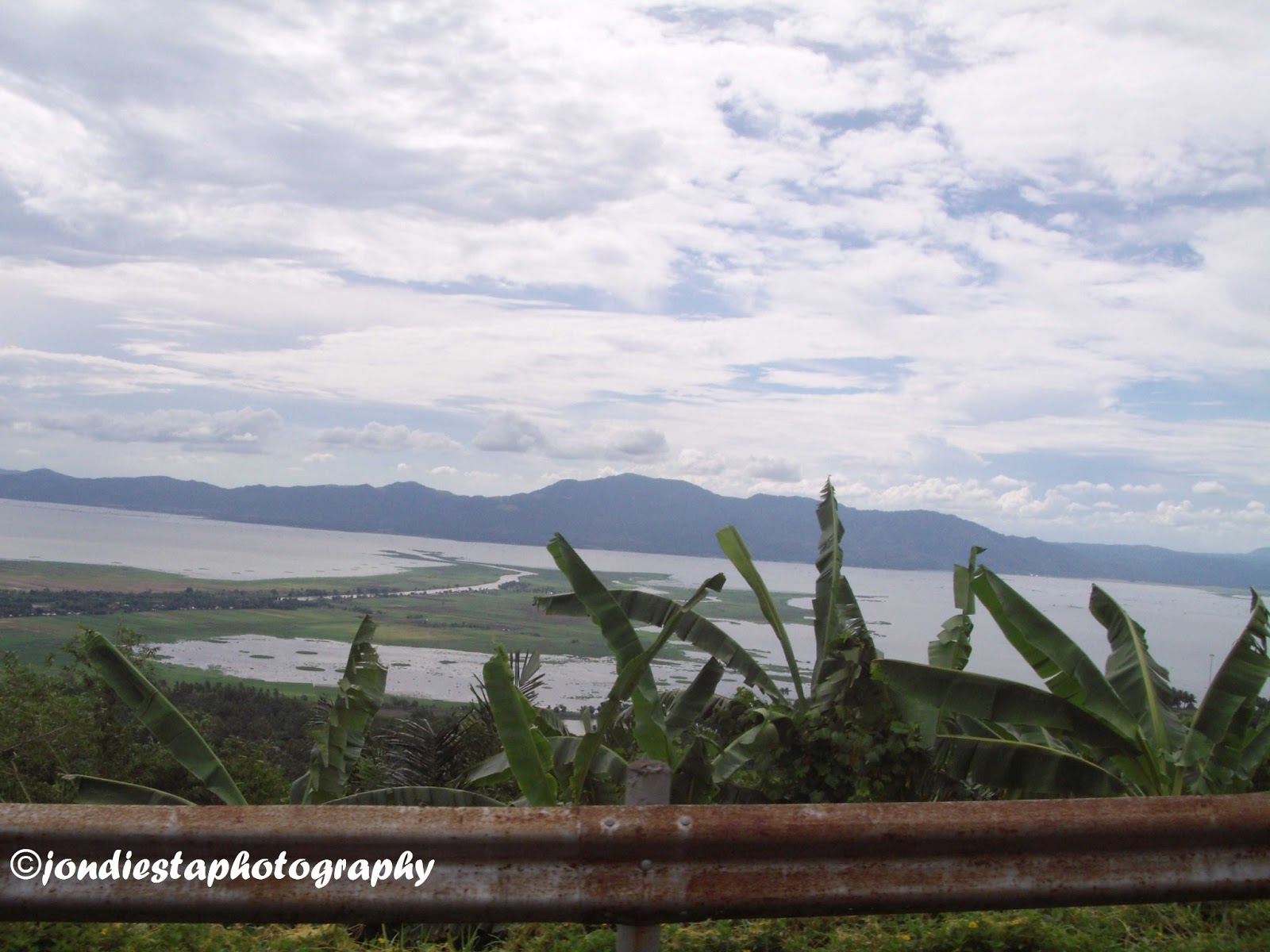
I decided to visit the town of Lucban in order to witness the Pahiyas Festival along with my friends. We left Cavite at 4:00 a.m. We decided to take the National Road from South Luzon Expressway, passing the towns of Los Banos to Pagsanjan. Then we made it to the town proper of Pagsanjan, the road was closed during that time due to road construction. So we took the highway going to Lumban and Caliraya Lake which leads to a one-hour travel leading passing the towns of Cavinti and Luisiana going to Lucban. It was such a hard travel because we passed the zigzag road and the mountainous terrain. However, the route we chose offered a spectacular view of the Caliraya Lake during sunrise plus the panoramic view of Laguna Lake and its lakeshore towns in the foothills of Sierra Madre.
After three hours of traveling, we made it to Lucban. The first attraction that I noticed is the mystic Mount Banahaw. It was always covered with clouds at seven o'clock in the morning that teemed with the sparkling sunlight and blue skies. As the day goes by, we saw the stunning view of Mount Banahaw filled with lush vegetation and verdant forests.
Then, we proceed to our first stop, Kamay ni Hesus Healing Center (Read the full article entitled
A Healing Journey in Kamay ni Hesus). There are tourists especially the religious devotees came here every year to commemorate the Stations of the Cross as well with the Healing Mass and prayers for hopes and healing. The main attraction in this site is the hilltop shrine which composed of approximately 300 steps to the Ascending Christ statue where you can pass different religious images depicted from the events in the Bible as well with the Last Supper, Stations of the Cross and the Resurrection of Jesus Christ .
 |
| Mount Banahaw was covered with thick clouds at 7:00 a.m. |
 |
| The verdant and stunning Mount Banahaw , 9:00 a.m. |
 |
| The Kamay ni Hesus Hill |
After the visit in Kamay ni Hesus, we went to Lucban town proper to witness the colorful Pahiyas Festival. The houses are beautiful because of colorful decorations such as fruits, vegetables, agricultural products, handicrafts and kiping as I roamed around the town. Every year, Pahiyas Festival held its contest to the most beautiful and creative house filled with decorations. The houses had different themes and concepts in putting their ornaments. Some examples including fences and walls made up of grasses and leaves; chandeliers, flowers and lanterns made up of kiping; different vegetables which turn into animals such as butterflies and insects; and different fruits and vegetables combined in one huge basket to symbolize a bountiful harvest. That is why, Lucbanins gave their 100% best effort in putting decorations in their home as well with their creativity and hardwork in putting agricultural ornaments. We took pictures of different houses as well with experiencing to visit the houses. We felt the hospitality of the residents as we enter the house, that is why I considered the Lucbanins as one of the most friendly Pinoy groups in our country.
 |
| A house made up of leaves, grains and kiping. |
 |
| Children are looking from the vegetable balcony. |
 |
| Green house |
 |
| A ginger house |
 |
| Kiping can be decorated as sunflowers and butterflies. |
 |
| House filled with colors using art materials. |
 |
| Fruits and vegetables as a sign of good harvest. |
 |
| An aquarium filled with gold fish and carp surrounded by agricultural products and grains. |
 |
| Kiping as chandeliers |
 |
| Flying insects. |
 |
| A gourd with a spicy smile. |
 |
| The tourists enjoy a pose while taking pictures at decorated houses. |
 |
| A cart made up of wheat, vegetables, kiping and grains which contained pansit habhab. |
 |
| Higantes Festival in Lucban. |
 |
| There are many tourists who crowded in the town during the Pahiyas Festival. |
During the town tour, I decided to take different local delicacies which is originated from Lucban. I tried to chum the savory Pansit Habhab in rectangular banana plate, taste the grilled Lucban Longganisa dipped with vinegar and chewing over colorful kiping or fried leaf-shaped rice crispies. (Read the article
The Pahiyas Festival Experience: Food Hopping in the Streets of Lucban).
 |
| Lucban's delicacies: pansit habhab, Lucban longganisa, kiping and budin. |
After food hopping, we proceeded to Saint Louis Bishop of Toulouse Church to attend the mass and to give our prayers. The first church was built in 1595 and the present church was completed in 1738. It is one of the Baroque churches in Quezon Province which was built during the Spanish era.
 |
| Lucban Church |
 |
| People are gathering around the church in order to attend the mass. |
After that, I decided to go on shopping and buy their local delicacies in order to have a pasalubong to my parents just to taste the local delicacies of Lucban and taking a glimpse of the decorated houses in the town.
We decided to go home but before that, we made a stop over in Lake Caliraya. The lake was built in 1939 in order to supply hydroelectric energy in the province. We felt the fresh air of the mountains and the lake and the serene ambiance which is refreshing from the busy scenario of the festival. As we passed the roads going to Caliraya Lake, there are beautiful sceneries including lush forests, verdant and towering mountain chains, and calm lakes that offer a spectacular view during sunrise or sunset that reflected the sunlight.
 |
| Lake Caliraya |
 |
| Verdant and lush forests plus the towering mountain range. |
 |
| Laguna de Bay and the lakeshore towns from the top of Sierra Madre mountains. |
Therefore, this experience in Pahiyas Festival is one of the best travels I've ever had because of the colorful culture of Lucban from natural wonders, lively festivals and delicious delicacies. I want to come back next time in Lucban to discover more of its culture. Truly, It's More Fun in Lucban.
"Yanung Rikit, Baling Ganda."
How to Get There:
From South Luzon Expressway, you can take the National Highway via Calamba Exit going to Santa Cruz. From there, you will pass the towns of Pagsanjan, Cavinti and Luisiana then you will make it to Lucban, Quezon. In addition, you can take the route passing the towns of Magdalena, Liliw and Majayjay then it will lead you to the town proper.
Other alternative route is from South Luzon Expressway going to Lucena City, passing the towns of San Pablo City, Tiaong, and Lucena. From Lucena, you can pass the town of Tayabas going to Lucban.
However, the road was closed in Pagsanjan during that time so we took the Lumban-Lake Caliraya route which leads to Cavinti and Luisiana going to Lucban, Quezon.
Check their website:
http://www.pahiyasfestival.com
Date of Travel: May 15, 2013